In 2002, Dr. Aristarkhova co-founded the international Undercurrents listserv alongside figures like Faith Wilding and Coco Fusco. Serving as a "virtual chora of hospitality" for women of color, queer, and white scholars, the platform insulated feminist theory from being dismissed as mere identity politics. Concurrently, posthuman feminists used these networks to critique the corporate and academic enclosure of a "biological commons". They fiercely scrutinized the commercial patenting and licensing of genetic material, human embryos, and stem cells, advocating instead for a shared, protected global gene pool.
Non-Linear Transitions: Virtual Reality and Becoming Dragon
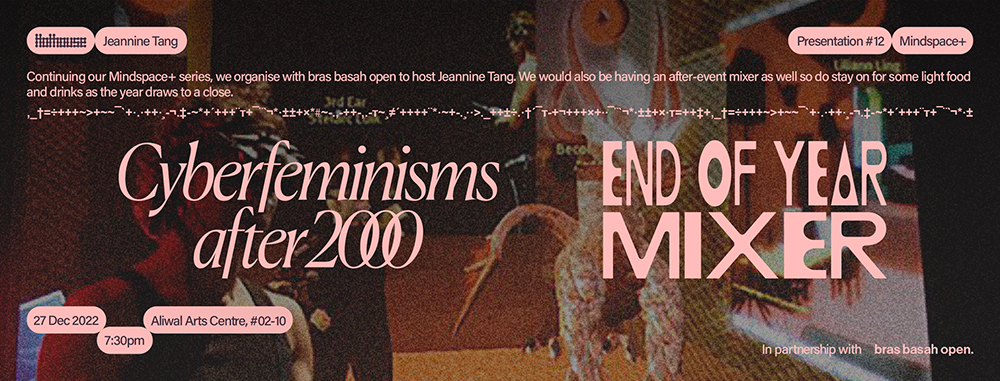
In 2008, artist Misha Cárdenas presented Becoming Dragon, a 365-hour mixed-reality performance where she lived continuously inside a virtual reality headset connected to the platform Second Life. The performance specifically targeted the medically mandated "real-life experience" test—a strict, one-year linear requirement imposed on transgender individuals seeking gender-affirming healthcare. By transitioning into a dragon avatar, Cárdenas reframed gender transition as a non-teleological process of "becoming" that resisted rigid human dualisms.
Since the 1960s, a year's 'real-life experience' or 'real-life test' of living in one's identified gender has been medically required as a standard of care for gender-affirming surgical care or hormone replacement therapy. This standard of eligibility has been widely disputed by trans activists, medical professionals, and ethicists for exposing trans people to violence, harassment, and discrimination, and for being unnecessary, prohibitive, and gatekeeping as a barrier to accessing critical care. Cárdenas countered with an alternative paradigm of mixed reality. *Becoming Dragon* was a non-teleological project of gendered and species becoming, dispossessed of mastery, never fully known in advance or to themselves. Drawing from decolonial feminisms to challenge any simple notion of transgender as a binary crossing from one gender to another, Cárdenas sought to connect lines of flight across boundaries of species, scale, and speculative reality.
Critiques of virtual reality at the time often presumed that online worlds were unrealizable fiction set apart from the realities of experience in an offline universe. Here, I would argue that Cárdenas's approach to VR not only prefigured the corporeal through the virtual, but also conjuncted their errant multiplicities as a trans infrastructure for traversing online avatars and offline selves, as an infrastructure of care for sustaining trans life through durational time.