Intermedia is an event-based programme that explores possibilities of counterpointing film, audio, visuals, and performative elements. We hope to invite practitioners interested in the refinement of their practice by challenging and exploring the possibilities in layering various mediums via architecture (metaverse), AR, VR, and live broadcasting.

354 chars

9 posts

View by

Hot House
Presentation #21
Intermedia ,
6.12.2025

It’s ‘too hot to think’¹. As Singapore braces for its hottest June, the summer solstice lures in the longest day of the year. This is solar acceleration, where heat death looms amidst an emerging solar epoch².

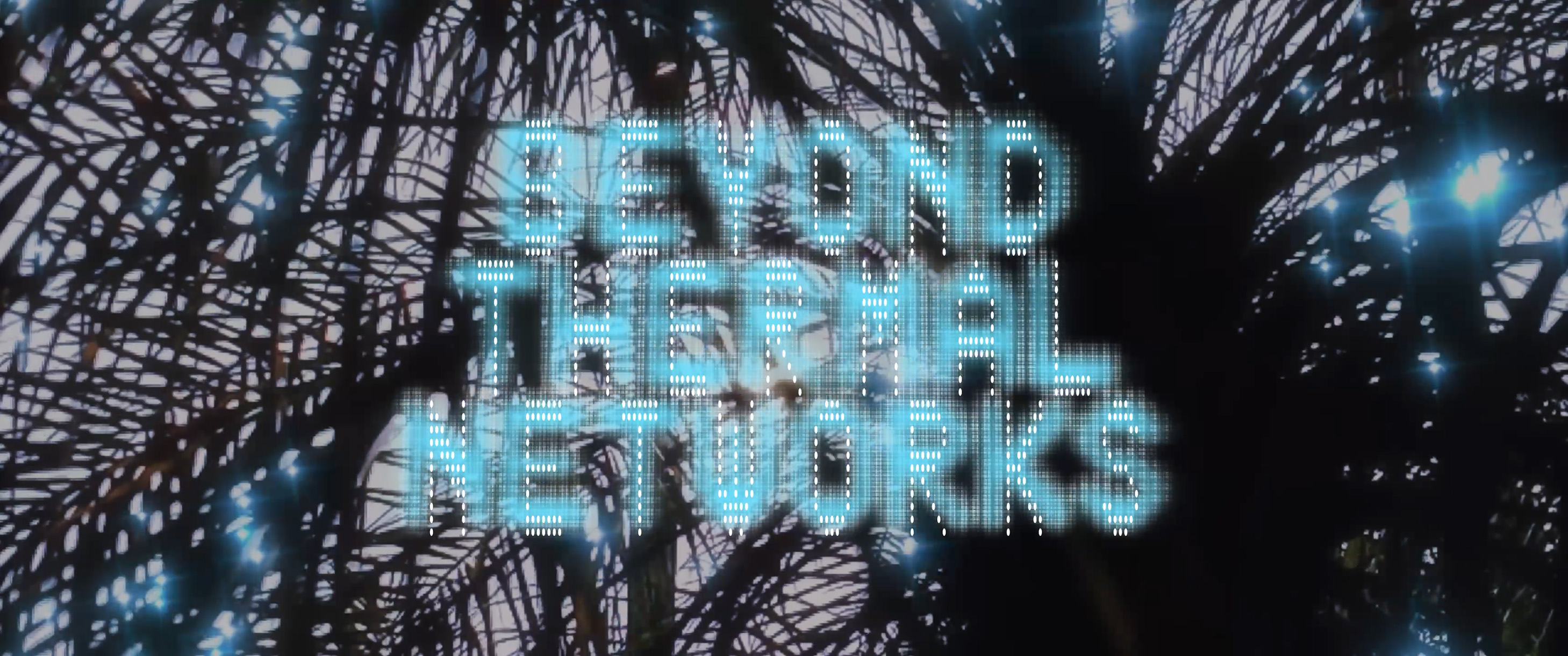
ʙᴇʏᴏɴᴅ ᴛʜᴇʀᴍᴀʟ ɴᴇᴛᴡᴏʀᴋs is a double bill of two films that excavate our planet’s fevered futures, speculating on what happens when current climate regulation systems face its inevitable entropy. It displays the ingenuity of regulating heat in the tropics, but also lays bare the extent of geo-engineering global projects, atmospheric control mechanisms and the construction of a solar imaginary.

ғᴜᴛᴜʀᴇ ᴛʀᴏᴘɪᴄs (2023) dir. Kent Chan³ pushes observations of tropical expansion (due to the climate emergency) to extreme ends, arriving upon the fictional scenarios of a future and global tropic. The work speculates upon the ramifications of earth’s warming and consequent loss of climate demarcation. In a mono-climatic world of forever-summers, might a global tropic mean the blurring of geographies, histories and cultures?

ᴛʀᴏᴘɪᴄ ᴛᴇᴍᴘᴇʀ (2024) dir. Elizabeth Gabrielle Lee⁴ cracks Singapore’s disciplined tropical facade, infiltrating the city-state’s environmental forgetting program through surveillant climatic infrastructures and extreme terraforming. Ghost voices—Nancy the Peranakan nyonya and omniscient J.A.C.E.—survey endangered mangroves while new energy processing islands rise from the ocean. Nymphs feed on petrol-washed coral reefs where botanical prowess collides with technological spectacle, conspiring against the vision of a solarpunk haven.

Followed by a listening session inspired by humid-haunted-scapes with Safuan Johari.

1656 chars
Presentation #21
Intermedia ,
8.6.2025

BEYOND THERMAL NETWORKS (Presentation)

What happens when heat gets under our skin and rewires how we think, write, and dream? “Perhaps we need to embrace jungle text, or humid persuasion, or deltaic quandaries, or we could have monsoonal rants. Perhaps we can engage in going troppo.”

ʙᴇʏᴏɴᴅ ᴛʜᴇʀᴍᴀʟ ɴᴇᴛᴡᴏʀᴋs at HotHouse presented a double bill screening of two films and a listening session. ʙᴇʏᴏɴᴅ ᴛʜᴇʀᴍᴀʟ ɴᴇᴛᴡᴏʀᴋs excavates our planet’s fevered futures and speculating on what happens when current climate regulation systems face inevitable entropy. 

The screening displayed the urge, fantasies and mania of regulating heat in the tropics. It conjured the extent of geo-engineering projects, atmospheric control mechanisms, and the construction of a solar imaginary. 

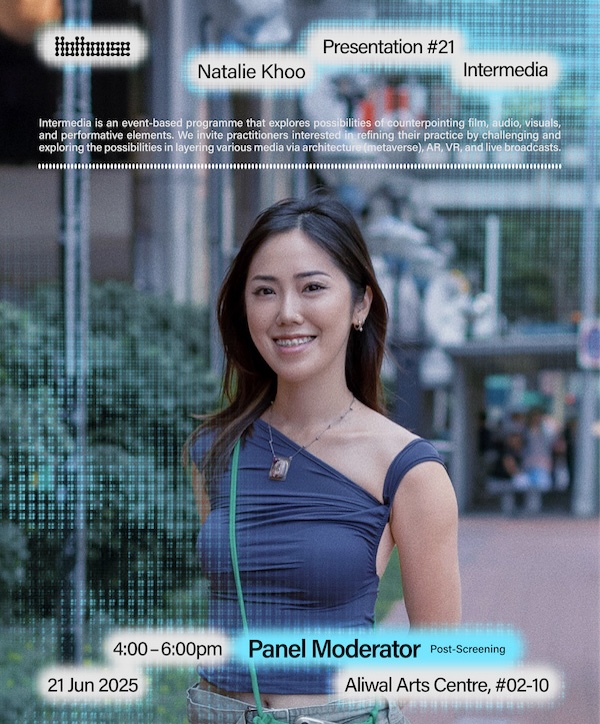
Q&A hosted by Natalie Khoo

Listening session inspired by humid-haunted-scapes with Safuan Johari

840 chars
Hot House
Presentation #21
Intermedia ,
6.19.2025

Natalie Khoo

Natalie Khoo is a filmmaker and programmer based in Singapore with a background in archaeology and anthropology. She programmes for Asian Film Archive² and has curated Retrospective: Edward Yang, y2K DreamZ, Orienting Paradise and previously programmed for National Gallery Singapore. Her own films have screened at Kurzfilm Festival Hamburg, Queer East Film Fest, Sea Shorts, Singapore Short Cuts, among others. She has served on the jury of FFD, and Singapore Shorts.

469 chars
Presentation #21
Intermedia ,
6.18.2025

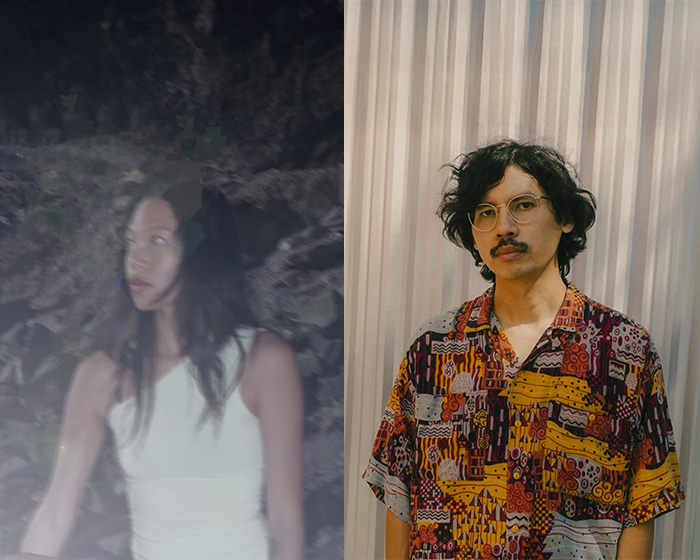
Safuan Johari

Safuan Johari is an artist who works primarily as a composer, music producer and sound designer. Music-making is usually a world building exercise and the resulting microcosms often meander through traditional, experimental and popular topographies of Nusantara (Maritime Southeast Asia) culture. Started out as a prominent figure in Singapore’s underground music scene, he has expanded his practice into composing for theatre, dance, films and multimedia installations.

Individually and as a collaborator, Safuan has performed, exhibited or presented works at Palais de Tokyo Paris, Festival/Tokyo, Sydney Festival, Worldwide Festival Sète, Singapore International Festival of the Arts and Singapore Fringe Festival.

716 chars
Presentation #21
Intermedia ,

Beyond Thermal Networks: Mythology, Climate Control, and Sound Design in the Tropical Multiverse

A panel discussion featuring sound designer Safuan Johari, moderator Natalie Khoo, and filmmakers Elizabeth G. Lee and Kent Chan (joining via video link). Together, they delve into the intersection of cinematic art, environmental politics, and spatial discourse within Southeast Asia. The conversation navigates everything from the haunting, ambient drones of urban air conditioning networks to the physical realities of artificial, gallery-constructed microclimates. By weaving together personal creative processes and audience dialogues, they interrogate how cultural mythologies, global capital, and memories of "islandry" actively collide with contemporary climate control and societal constructs.

701 chars
Presentation #21
Intermedia ,
6.21.2025

1.  Sound Design, Degradation, and Humidity

Safuan Johari: 

We used intense soundscapes to portray a seamless flow, moving fluidly from one song to another. Before this session, someone mentioned that my sound design captures humidity. That was the first time I had heard it framed that way, but thinking about it, that quality comes through the tape wobbling and the general material degradation—like records warping or cassette tapes getting moldy.

Additionally, our sampling techniques were chosen specifically to frame and evoke imagery of Singapore and Southeast Asia. When the concept of 'Tropika' was introduced, I immediately began imagining how sound layers could help portray that environment, which is what led to this specific approach to sampling.

771 chars
Presentation #21
Intermedia ,
6.21.2025

2. Mythology, Climate Control, and the AC Double Bind

Natalie Khoo:

It is interesting to think about how you are sampling the actual sound of the environment. There are many affinities between these films. From a practical filmmaking standpoint, you shared crew members, including the DP and the producer. It feels like you are constructing a shared tropical multiverse together. Another major element that appears in both films is mythology. Could you speak a little bit about how you deal with mythology in your respective works?

Elizabeth G Lee:

In my work, there is a goddess of air. I wanted to portray her as a disembodied presence that enters through modern cooling devices, like air purifiers and air conditioners. The voice you hear is Jace, an AI, omniscient being who rules over this fictional universe. He is trying to connect with a character tied to the past, because the present world in the film has become entirely disconnected from the natural goddess of air. Instead, we rely completely on air conditioning and heavy machinery just to breathe, live, and avoid sweating.

When writing the script, we were interested in exploring the desire to shut out the sun in a pursuit to return to a cold, temperate environment. Even though the characters talk about embracing non-human worlds and the natural heat, we remain trapped in a double bind—we are essentially slaves to the machines that regulate our climate. The film does not present a utopian dream where we can simply abandon technology and live in extreme heat, especially when that heat is exacerbated by climate change. Rather, we have to find a healthier way to coexist with these devices—perhaps by setting the AC to 26°C on eco mode instead of blasting it at 18°C, which just dumps more heat outside. It is about reckoning with this double bind rather than adopting a purely Luddite way of living.

Kent Chan:

For me, it always comes back to stories. These stories explain how landscapes used to be. In certain places, there are narratives about things disappearing, or about fictional, archaeological landscapes. I have always been drawn to how stories help us make sense of climate change. The reality of global warming is that we are not going to completely fix or stop it, so these narratives help us process how we deal with the changing tropic.

2325 chars
Presentation #21
Intermedia ,
6.21.2025

3.  Microclimates and Art Installations

Natalie Khoo:

You are exploring the ghosts left in the wake of bioengineering—both its successes and its failures. Formally, I know one of these projects was originally developed as an art installation involving a physical microclimate. Could you share how that was first presented to create a palpable feeling of heat?

Kent Chan:

I did a show at Gasworks in London. The gallery space featured two distinct chambers. I didn't want to just lock the audience in a standard room, so we introduced a physical intervention using a series of water barrels. In both chambers, these barrels pumped out intense heat and moisture. Every 33 minutes, the microclimates would swap: one room would get the heat, while the other would shift.

In the tropics, we do not have distinct seasons like summer or winter; instead, we have wet and dry seasons. What I appreciate about this system is how moisture connects everything together, acting as a larger weather system that physically affects the audience as they watch the work.

Elizabeth G Lee:

Continuing that theme of moisture, we chose to embody it through two characters framed as water nymphs. They are human, but act as spirits attracted to pools of energy. One nymph is placed in front of a former oil refinery located in the remaining 4% of our original mangrove systems. The other nymph is drawn to a karaoke lounge, which serves as a different kind of energy pool. I wanted to look at moisture in two ways: the literal sense of a mangrove ecosystem, and the metaphorical moisture shared body-to-body via proximity in a crowded lounge.

Regarding the music, we began by exchanging playlists containing tracks I would frequently Shazam in these local lounges, mixed with electronic music. The sound designer took those concepts and evolved them into a completely different kind of sonic monster. I have always been a consumer of liminal spaces and old malls, drawing inspiration from creators like Adam Curtis who piece together archival footage with subcultural electronic music. Scoring the karaoke venue sequence was easily the most enjoyable part of the process.

2159 chars
Presentation #21
Intermedia ,
6.21.2025

Audience Q&A

Audience Member 1:

Was the long sequence filmed in a single take, and how much effort did it require?

Elizabeth G Lee:

My cinematographer is here and can verify that it wasn't strictly a single take. We shot it three or four times. The take we ended up using actually had a minor mistake where a crew member was briefly visible in the shot, but we managed to cover it up in post-production. It was more fun than difficult because our main task was just getting people to dance. The process was quite haphazard. The venue owners gave us access to the space but we didn't have the entire building to ourselves—just a few rooms. We were practicing on set the day before, just praying that no regular customers would walk out into the frame during a take. Thankfully, it went smoothly.

Audience Member 2:

Both films focus heavily on Singapore. A large part of tropical discourse revolves around the concept of the island or the archipelago. Are you concerned with 'islandry' as a framework for your practice?

Kent Chan:

I wanted to find a way to speak about Singapore without explicitly naming it. I often tell people that the sun is not my friend, but I tend to focus more on the traits of specific places rather than the literal geographical shape of an island."

Elizabeth G Lee:

I have also been thinking about how we can view our geography archipelagically rather than just as a singular landmass. Growing up, I didn't consciously think of myself as an 'islander'—it felt like living on a mainland. However, I am very interested in how islands are exoticized through tourism and a cultural obsession with warmer climates, which carries obvious colonial undertones. There is also the element of global capital. Islands are frequently romanticized as vacation paradises, but they are simultaneously utilized as offshore shields for tax evasion and illegitimate businesses. This double dimension of 'islandry' is something I hope to explore further in future work.

Audience Member 3:

Since the voice actor for the character Nancy is in the audience, could you share what the process of voicing that character was like?

Audience Member 4:

I am the filmmaker's mother. When she brought me the script, which had been translated by a member of a Peranakan association, she asked if I would record the voiceover. It wasn't straightforward because the script utilized a very old dialect called Baba Punu. Many of the words are no longer in common use. I actually had to consult older aunts and relatives, and even they don't use those specific terms anymore. Hearing my own voice played back on screen makes me a bit uncomfortable, but I hope I did the language justice.

2662 chars
Elizabeth G. Lee & Kent Chan
Hide